





The First Things To Check Before Play
A smooth start usually comes from doing boring things well. Check the email, confirm the password format, and make sure you are using a private device before you think about payments or game choice. In 2026, most players expect instant access, yet the cleaner path is still the slower first minute.
Imagine opening the account late in the evening and wanting to get straight to the lobby. Usually that is when mistakes happen: an old saved password appears, autofill inserts the wrong address, or a shared browser stores details you did not mean to keep. A quick review now saves time later.
Before You Enter Your Details
Treat the first screen like a checkpoint, not a formality. Use a trusted connection, avoid public devices, and make sure your browser is not reusing data from another profile. If you are on a new phone, pause and confirm where your password will be stored. Most adult players do better when their account details live in one secure place instead of being scattered across notes, browsers, and message threads.
What To Prepare On The Same Screen
Have one payment method in mind, but do not rush into funding the balance before you understand the account layout. Find the cashier, find support, and find the tools that let you limit time or spending. Picture a player who signs in easily, then cannot locate the help area when a payment stays pending. Usually the problem is not the account - it is that the menu was never mapped in advance.
What Changes After Reefspins Login
Once the account opens, the task changes from access to decisions. You are no longer trying to get in; you are deciding what to do first. Some people go straight to promotions, others to the cashier, others to the game lobby. The better path depends on your goal, not on whatever box flashes first.
If the session is meant to be short, set the boundaries before you browse. Choose a spending amount, decide how long you want to stay, and only then look at games. Usually players reverse that order, then try to rebuild discipline after emotion has already entered the session.
Navigation matters more than many users expect. A useful account area should let you move between recent games, favorites, payments, messages, and safety tools without hunting through multiple layers. If the layout feels busy, spend one pass learning it. That single pass makes every later visit calmer.
Common Reasons Access Slows Down
Slow entry does not always mean a serious technical issue. Sometimes a browser is holding an expired session, an old password is cached, or the device time is slightly off. Imagine retrying the same details five times because the screen keeps bouncing back. Usually the faster fix is to close the tab, reopen a fresh window, and test once instead of stacking failed attempts on top of each other.
Fast Fixes Before Contacting Support
Start with the short list: refresh once, open a private window, check the spelling of the email address, and reset the password only if you are sure the entry is wrong. If the issue continues, gather useful details before writing to support - device type, browser, time of the failed attempt, and what happened after you pressed the button. Clear notes beat frustrated messages every time.

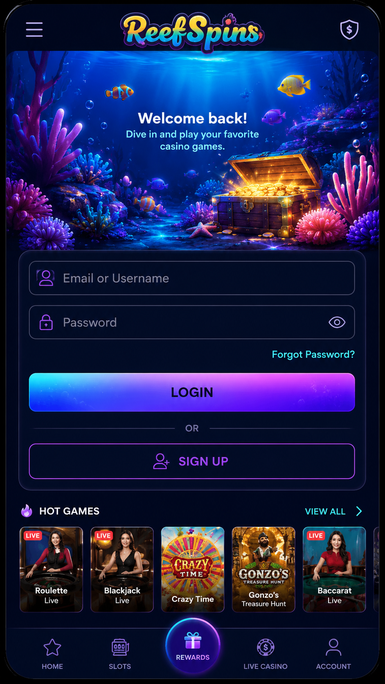
Navigating Reefspins Login Australia On Mobile
Mobile access feels simple until the screen gets crowded. On a phone, every field is smaller, every menu is tighter, and repeated taps can create confusion that looks like lag. The best habit is to move in order: enter details, confirm the account page has loaded fully, then open the sections you actually need.
Imagine trying to enter the account while commuting. Most players rush, miss one character, and blame the phone. A calmer routine works better. Check whether autocorrect changed the email, make sure no extra space was added at the end, and do not switch between Wi-Fi and mobile data right before a payment action.
Mobile play also hides control tools more easily. Session reminders, cooling-off options, and spending limits may sit behind a compact icon rather than on the main screen. Spend one minute finding them before play begins. On a small screen, preparation is not extra work - it is the thing that prevents repeated mistakes.
Small-Screen Steps That Reduce Errors
Use copy and paste carefully, especially for email addresses and payment data. If the connection changes in the middle of a session, reload the page once before confirming a deposit or a cashout. Usually players only notice weak signal after something stalls, then they tap again and create more confusion. One careful reset at the right moment is better than five fast retries.
Cashier Flow, Limits, And Withdrawal Planning

The cashier is where good intentions become real rules. A calm player thinks about deposits and withdrawals before the first game opens, not after the balance has started moving. That means choosing one familiar method, checking whether the profile needs extra review, and deciding what amount fits the session.
Imagine a user who deposits quickly, wins early, and wants to cash out at once. The worst time to notice a missing profile detail is after the request has already been sent. A better approach is to complete the account review early, keep payment details consistent, and avoid changing methods without a clear reason.
Limits belong in the same conversation. Some adults prefer a daily cap, others think in weekly amounts, but the useful rule is simple: set the number before the result of any game starts affecting judgment. When the limit exists in advance, decisions later feel less emotional and more deliberate.
Here is a simple account checklist many players use before real-money activity begins:
Account Task | What To Prepare | Why It Helps |
|---|---|---|
First deposit | One familiar payment method | Reduces errors during the first funding step |
Profile review | Matching personal details | Avoids delays when the account is checked |
Cashout request | Consistent payment route | Makes balance movement easier to follow |
Session control | Time and spending boundary | Supports calmer decisions during play |
Support request | Device and payment notes | Makes problem reports more precise |
How Adults Usually Set Their Boundaries
The best boundary is the one you will actually respect. Some people work with a small session amount, others rely on time reminders because long play makes them less careful. Picture a player who says, "I will just see how it goes." Usually that means there is no real edge. A stronger routine is to set the amount, set the time, and accept that pausing is not failure - it is part of playing responsibly.
Using Reefspins Sign Up Code During Registration
During registration, some users see an optional offer field and immediately start rushing. That is rarely the best move. Fill the required details first, review them, and then decide whether any promotional entry belongs to the account setup you are using. Calm, mechanical steps work better here than guesswork.
If you are registering from Australia, read every label instead of assuming the path is identical on every device. Sometimes the optional field appears during account creation, sometimes later in the payment flow, and sometimes only after a specific offer path has been selected. Usually players get stuck because they expect the same layout everywhere.
When The Bonus Field Appears
It may show up during registration or later in the deposit sequence. Imagine reaching the cashier and suddenly remembering an offer you meant to use. The right response is not to panic and edit every profile page. Usually the better move is to review the promotional area calmly and check whether the field belongs to account creation, funding, or a separate rewards section.
What To Check Before Confirming Details
Review spelling, age confirmation, country selection, and contact information before the final tap. This last screen feels easy to ignore because everyone wants to move forward, but it is one of the few slow moments that can prevent a lot of friction. Most players who complete registration cleanly do one simple thing well: they read the final screen instead of treating it like a button to hurry through.
Support, Break Tools, And Safe Session Control
A strong platform experience is not only about fast play. It is also about how easily an adult user can step back, ask for help, and reduce friction when something feels off. Support matters, but the self-management tools around the account matter just as much.
Think about the moments when people actually need help. It is rarely during a calm browse through the lobby. It is when a payment is pending, an account review appears unexpectedly, or a session has run longer than planned. In those moments, clarity beats speed.
Find the help route before you need it. Check whether chat, message support, or an in-account help center is visible, then locate the options for a short pause, longer cooling-off period, or spending control. Imagine feeling frustrated after a failed action and wanting to keep clicking until something changes. Usually that only makes the problem feel larger. A short pause and a clear support note work better.
Choosing Games Without Losing Structure
The lobby can pull attention in too many directions at once. New titles, bright categories, and rotating offers all compete for the next click. That is why structure matters. Decide what kind of session you want before you browse - short and casual, focused on one title, or limited to a small group of familiar choices.
Most players benefit from narrowing the first decision. Pick one category, review the information shown beside each option, and avoid opening too many tabs at once. Imagine planning to test one game for twenty minutes, then bouncing across five because the lobby keeps tempting you. Usually control returns when you stop, finish one cycle, review the balance, and only then decide whether another choice makes sense.
This structure also helps when it is time to stop. When the session has shape, you remember what you planned, what you spent, and whether your actions still match that plan. That is a stronger position than reacting to whatever appears next.